
Interventions
-

Therapeutic Exercise
Therapeutic exercise helps improve strength, mobility, endurance, and overall function. Each dog receives a personalized home exercise program to support progress between visits. Whether recovering from surgery, managing arthritis, or addressing weakness, exercise is a key part of rehabilitation.
-

Manual Therapy
Manual therapy is used to address soft tissue restrictions such as tight muscles, stiffness, and scar tissue. Techniques may include stretching, soft tissue mobilization, and scar mobilization to reduce discomfort and improve movement.
-
Neuromuscular Re-education
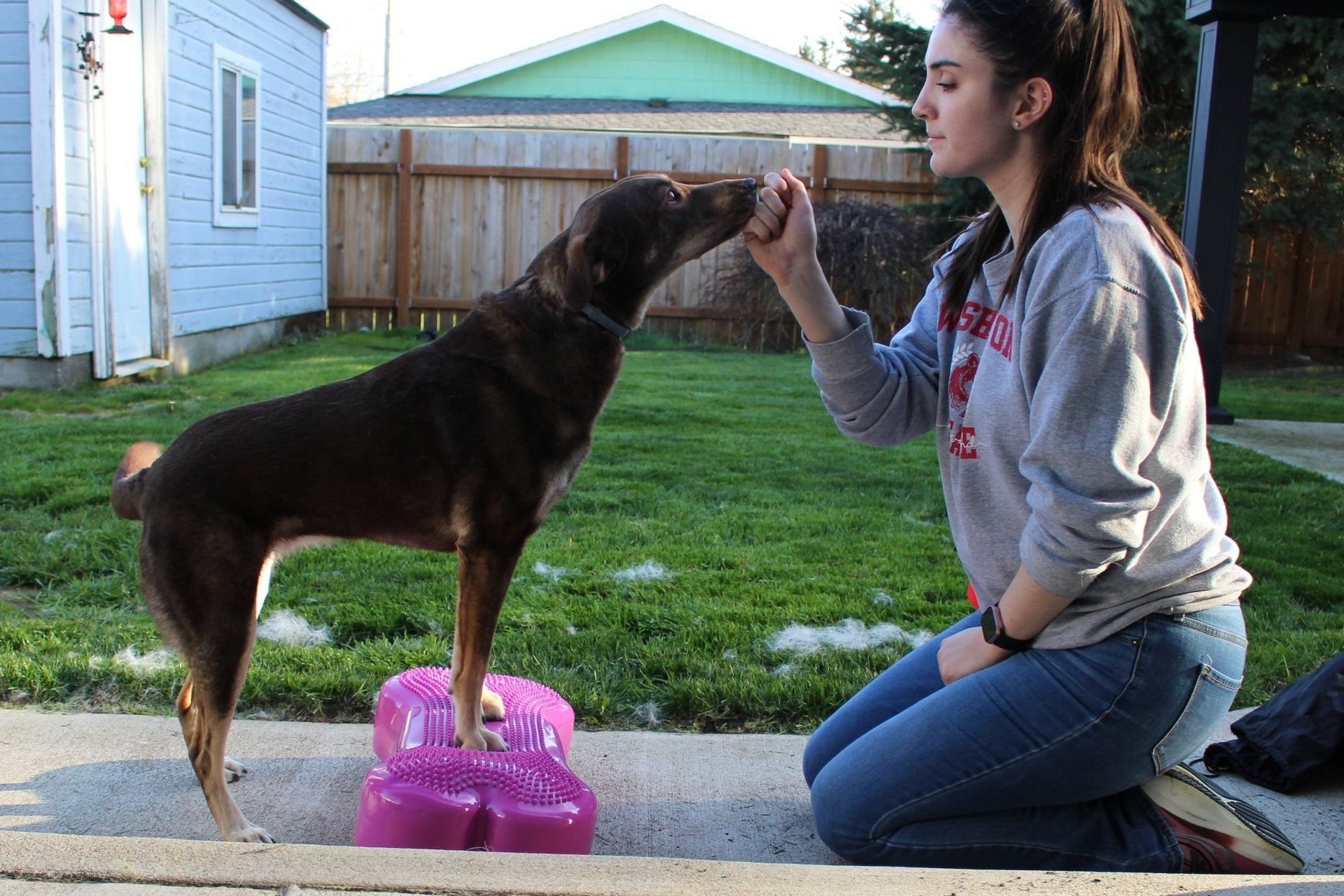
Neuromuscular re-education focuses on balance, coordination, body awareness, and movement quality. This may include exercises on varied surfaces and guided activities to improve stability and restore functional movement patterns. It is especially helpful after surgery or for neurological conditions.
-
Extracorporeal Shockwave Therapy
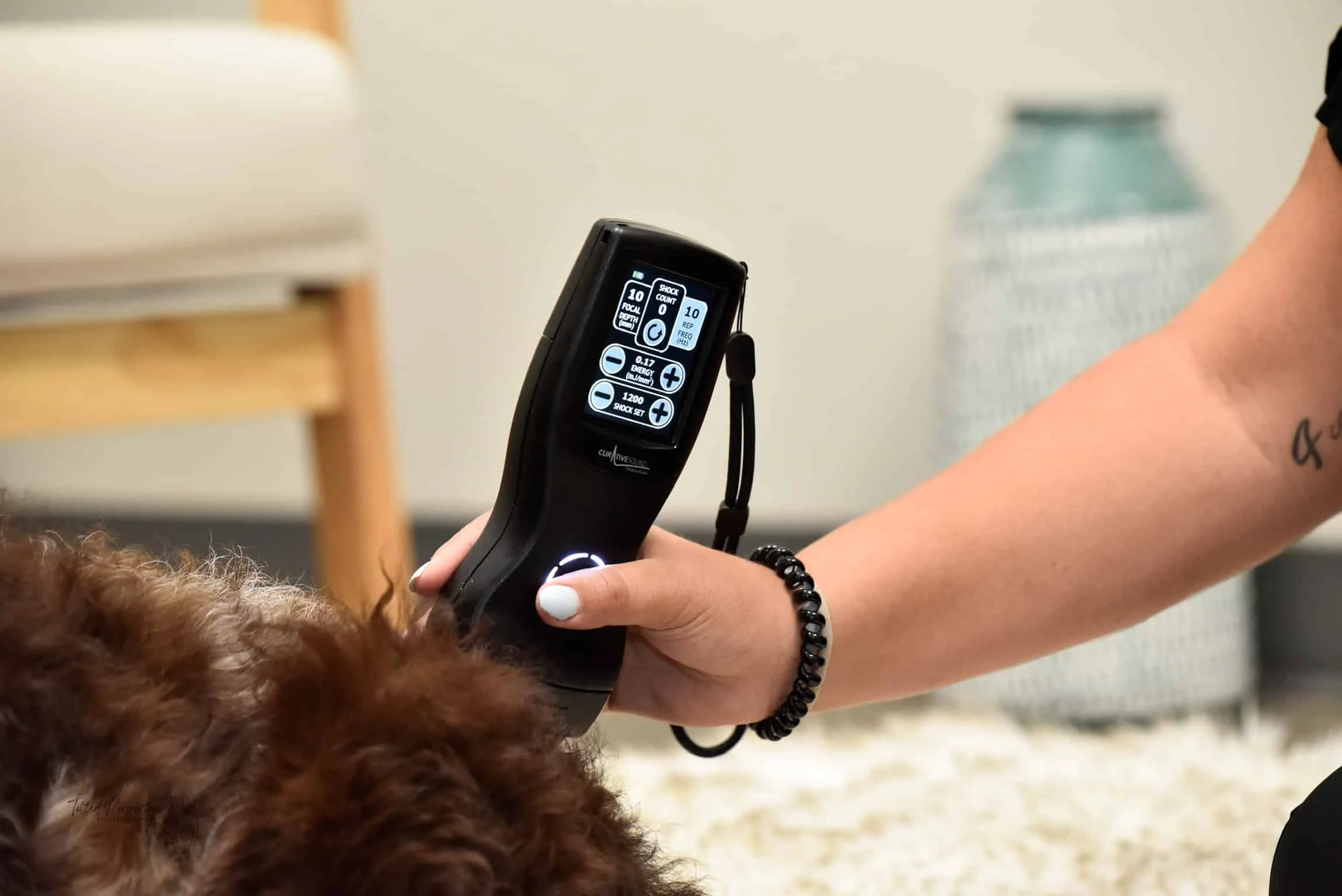
Focused shockwave therapy is a non-invasive treatment that uses acoustic waves to stimulate healing and reduce pain in deeper tissues. It is often beneficial for arthritis, tendon or ligament injuries, muscle strains, post-operative recovery, and chronic conditions that have plateaued. Treatments are performed in the comfort of your home, and most dogs tolerate them very well.
-

Cold Laser Therapy
Cold laser therapy uses specific wavelengths of light to help reduce pain, decrease inflammation, and support tissue healing. It is commonly used for arthritis, post-operative recovery, soft tissue injuries, and areas of soreness or stiffness. Treatments are quiet, gentle, and well tolerated by most dogs.
-
PEMF
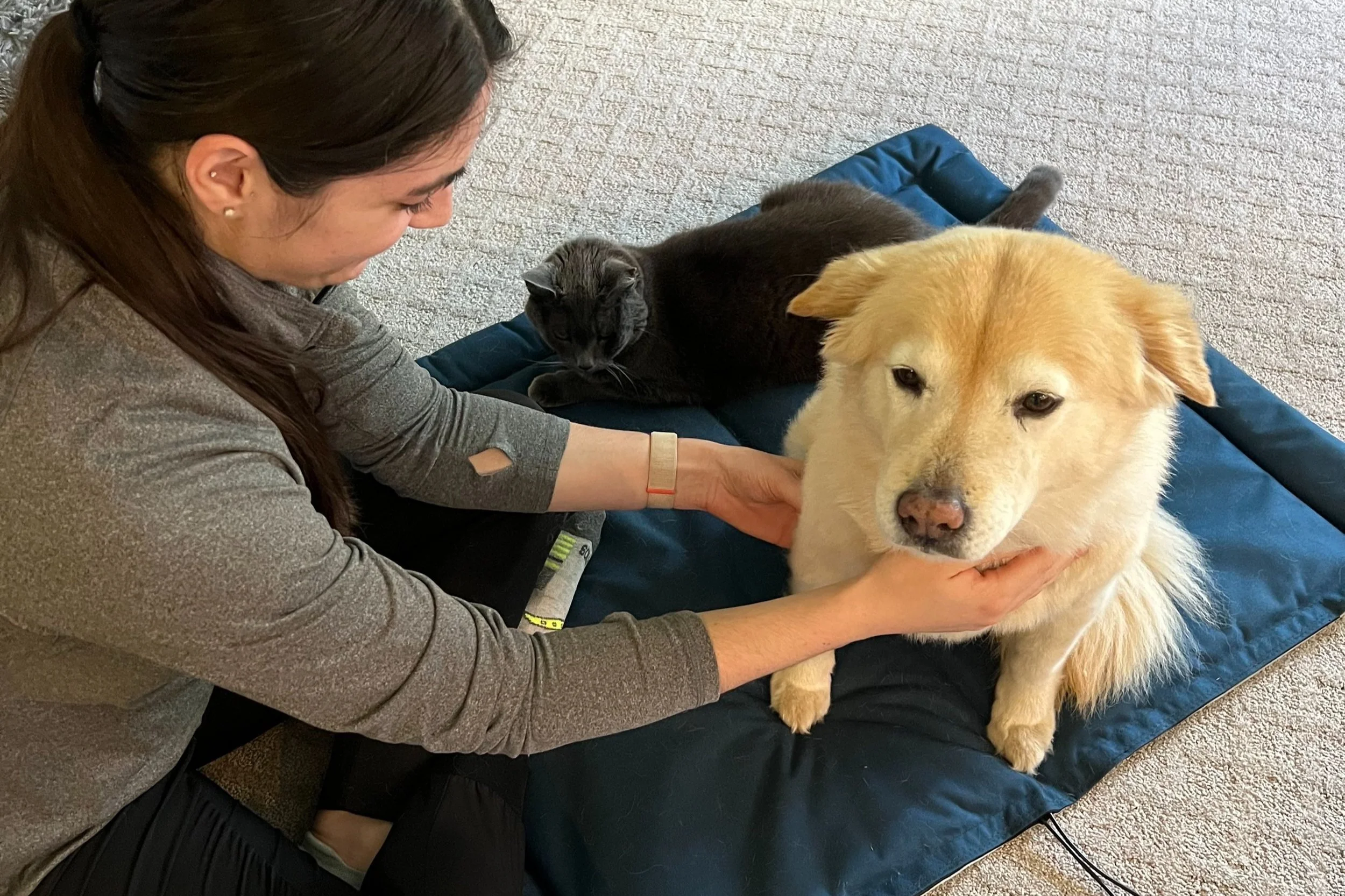
Pulsed Electromagnetic Field Therapy (PEMF) uses gentle electromagnetic pulses to support circulation, reduce discomfort, and promote the body’s natural healing processes. It is commonly used for arthritis, post-exercise or post-surgical recovery, and generalized aches or stiffness. Many dogs find PEMF calming and relaxing.
-
Electrical Stimulation (NMES/IFC)
Electrical stimulation can be used for muscle retraining, strengthening, pain relief, and circulation. NMES helps activate weakened muscles after surgery, injury, or inactivity. IFC is commonly used to reduce pain, muscle spasm, and discomfort associated with arthritis or soft tissue injuries. Treatments are adjusted to each dog’s comfort level.
-

Bracing (Fitting/Training)
We provide bracing services for orthopedic and neurological conditions including CCL tears, Achilles ruptures, degenerative myelopathy, brachial plexus injuries, and carpal hyperextension injuries. Services include measuring, fitting, and training with both custom and off-the-shelf braces.
-

Wheelchair (Fitting/Training)
For dogs with IVDD, degenerative myelopathy, brachial plexus injury, amputations, or other mobility limitations, we offer wheelchair fitting and training. Custom front and rear support carts can help improve mobility, independence, and quality of life.
Appointment Types
Evaluation (90 minutes)
Before your visit, medical records are reviewed. During the evaluation, we discuss your dog’s history, current limitations, behaviors, and treatment goals. A comprehensive hands-on assessment is then performed, followed by initial treatment and recommendations. A report is sent to your referring veterinarian.
Treatment (60 minutes)
Follow-up visits include a customized combination of therapies based on your dog’s needs and progress. Sessions may include manual therapy, exercise, balance training, pain-relieving modalities, and muscle retraining techniques.
Progress Report (60 minutes)
Every 5–10 visits, a progress reassessment is completed to evaluate response to treatment and determine whether changes to the plan are needed. A detailed update is also sent to your referring veterinarian.